Finding Mentorship in the Writings of Jessie Maple
This is another BFC/A repost. It went up on their blog January 30th as promotion for the screening of Twice as Nice (1989) and the Q&A, with Jessie Maple herself. Some big news, kinda related, is that I’ve been accepted into the PhD in Media Studies program at IU. This interest that I’ve had in Black film will become my full-time focus, and I’ll have the opportunity to take production classes too! I very well may be a filmmaker come 2024. I look forward to the new experiences & challenges, and I look forward to the people—mentors, peers, students—that I’ll meet along the way
I’ve had quite a few conversations with a friend of mine on the subject of mentors. How difficult it is to find one who challenges your work, someone who truly sees the value in it rather than how valuable they are to your career, someone who also genuinely cares about your general well-being. It’s about more than comments and suggestions on a piece. It’s about more than a recommendation letter. It’s about sharing anecdotes, tools, aesthetics, philosophies that give us a stable starting point from which to build our own.
For those who struggle to connect, often books are the answer. Books as mentors. Oeuvres as mentors. Toni Morrison is gone and was all over the place busy when she was alive. The way to access her tools, anecdotes, aesthetics, and philosophies is to read every single thing she wrote, sit down and watch the lectures and interviews she did, read the books she edited, and so on. The same with any artist in any field working with any medium. Studying as mentorship.
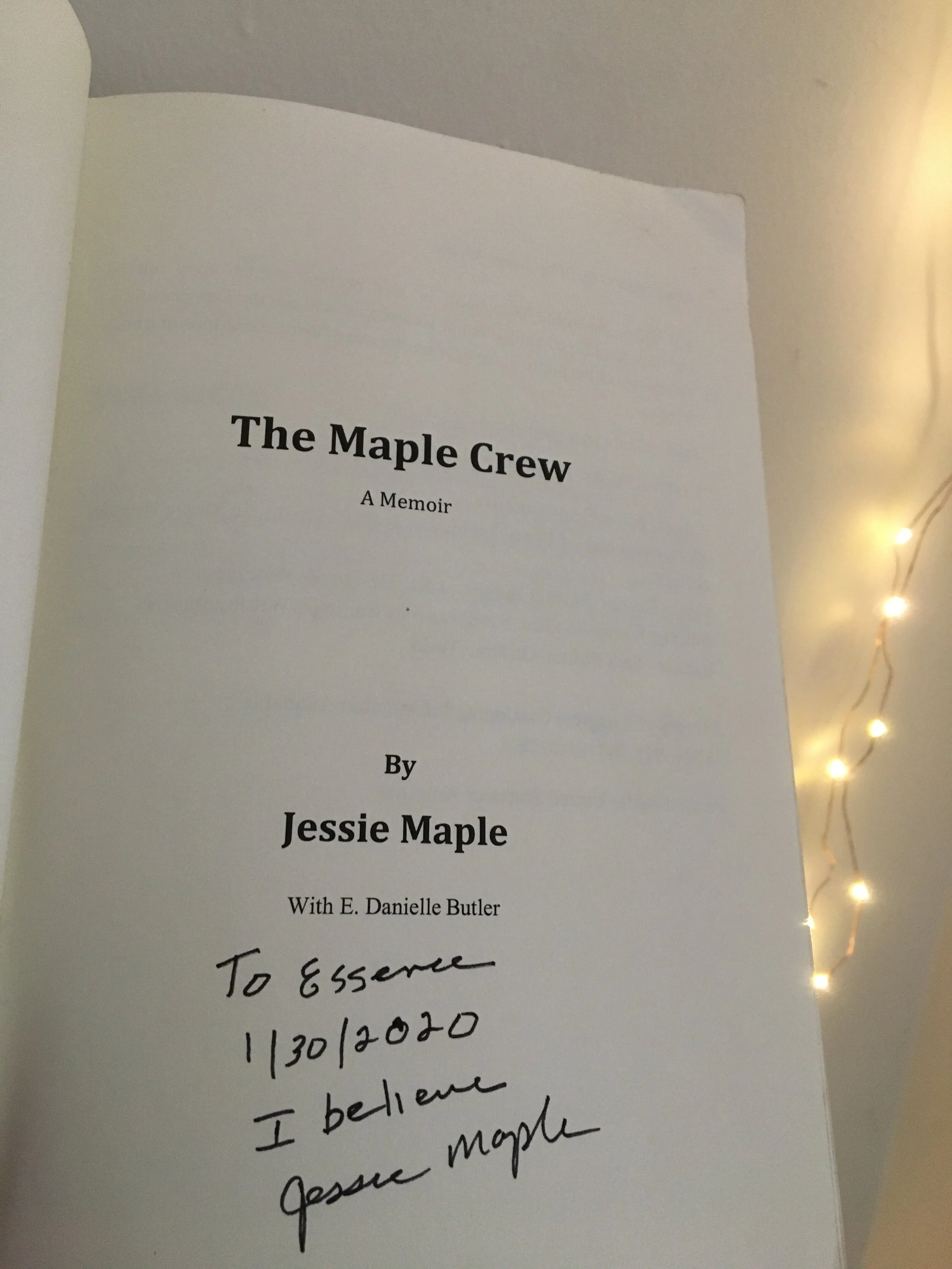
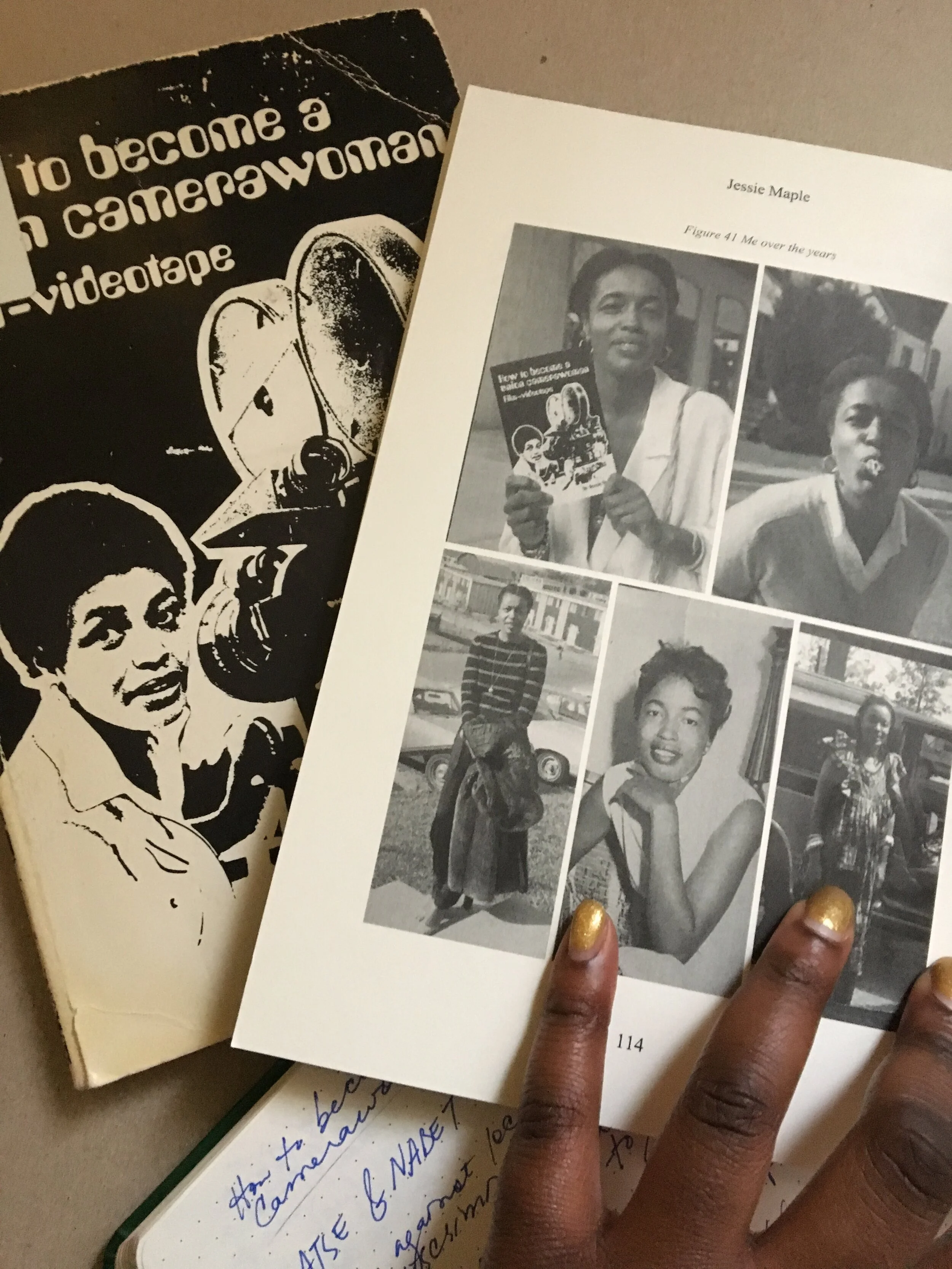
June 15, 2019, filmmaker Jessie Maple released her second memoir The Maple Crew. The copy on the back states that it picks up where How to Become a Union Camerawoman—Film, Video Tape left off, so I circled back and read that book first. From sentence one of the preface, Maple is forthcoming about the glass ceiling keeping minorities and women out of filmmaking in the year 1977 and her desire to see us not only breaking into the film industry but also being backed by a union. Though they weren’t always supportive of minority interests, unions are what increase our chances at regular work and competitive pay. They serve as yet another advocate for laborers who advocate for themselves.
Alongside the matter-of-fact tone, what I immediately latched onto in How to Become a Union Camerawoman is the epistolary frame. No, the text doesn’t open with “Dear Reader,” or “Dear Aspiring Camerawoman.” However, Maple does say, “This is my answer to those young Black and other minority women who have written me asking ‘How did you become a union camerawoman?’” and she even includes four of these letters verbatim. “To each of you,” she says. “I hope this book helps.” Her choice to write a book instead of letters sent straight to return addresses on envelopes cut out some of the exclusivity of her mentorship. Anyone with access to the book becomes her student.
Maple leads us step-by-step from her career shift into film/TV, through her path obtaining union status and her subsequent promotions, to her cases against local news stations that discriminated against her. A whole seven-year period of anecdotes.
In the final section, she goes so far as to list the specific equipment an aspiring cameraperson needs to learn to work in the industry, the addresses and phone numbers to unions and where to find work in major cities, and other books to seek out as resources. These are our tools.
Though some information is surely dated, How to Become a Union Camerawoman is a generous project. In addition to the anecdotes that show us the culture of the industry and tools that perhaps can get us started, we’re given detail that’ll provide historical context to our own research in film.
Maple continues her generosity in her second memoir, The Maple Crew. For goodness sake, her personal email is visible in the front matter of the book! She offers more anecdotes from her personal life—actual images too. We see her childhood home and learn about the habits her parents instilled in her. She gives a straight-to-the-point account of her relationship with her husband, then starts over and opens up more about the romance and the scandal at its origins because she knows that we would want it. She delves into the process of making feature films, starting multiple side projects—from a cookie business to 20 West, the independent film house ran out her own basement. She even shares the experience of renewed interest in her work from her perspective. The Maple Crew expands on some of Maple’s early life and career, then, as promised, picks up where her career left off in How to Become a Union Camerawoman. We come full-circle to a living legend.
Also in The Maple Crew, we spend more time with Maple’s independent film work. Her aesthetics are clearer. No mainstream, Hollywood stories. She wants her films to be about things that bother her, “to shine a light on what some would consider to be dark places.” Drug addiction and the struggles that come with integrating found family in Will (1981). Some of the barriers young, Black women face in Twice as Nice (1989). Her documentaries ask challenging social questions—embedded even in their titles—Methodone: Wonder Drug or Evil Spirit (1976), Black Economic Power: Reality or Fantasy (1977). In the section titled “My Process,” Maple comments on her straight-to-the-point approach. It’s the same in her writing and production for film as it is in her voice in these two books. No fluff.
She also outlines the Maple Crew values, a life philosophy that she and her team, her family, subscribe to. Among them: fearlessness, goodness, independence, and a belief that all you need is within reach. From How to Become a Union Camerawoman to The Maple Crew, Maple proves herself bold and community-minded, as someone who both challenges and cares.
Those of us fortunate enough to find mentorship like this—whether face-to-face or via deep study—are in debt of the greatest variety. In return for the anecdotes, tools, aesthetics, and philosophies, we honor. Especially, I must say, our Black women mentors, because they’re pushing back on what Darlene Clark Hine referred to as “a culture of dissemblance” that has saved our literal lives since the days of Reconstruction. They’re taking risks they don’t have to and investing energy they could very well choose to be stingy with after hundreds of years of being expected to labor for everyone for nothing in return. To honor them, we say their names, share and preserve their work, and we make them proud with our own. We turn to study the upcoming generation of writers, filmmakers, artists, glass ceiling breakers and take on the next round of mentorship. We become the mentors we are so fortunate to have.